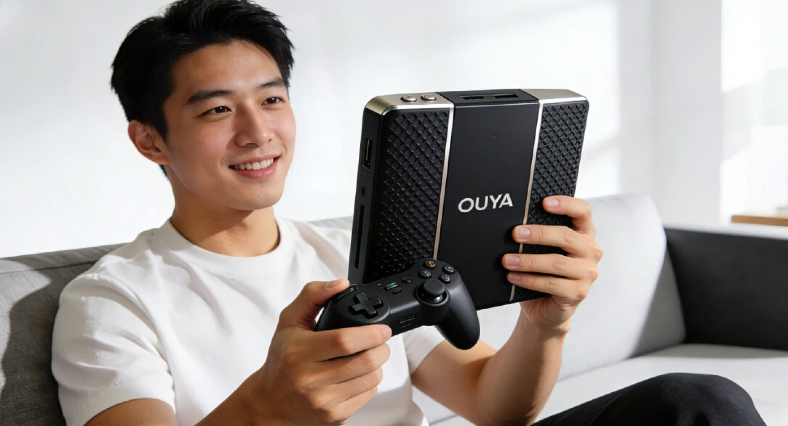
OUYA Game Console
March 11, 2026OUYA Console
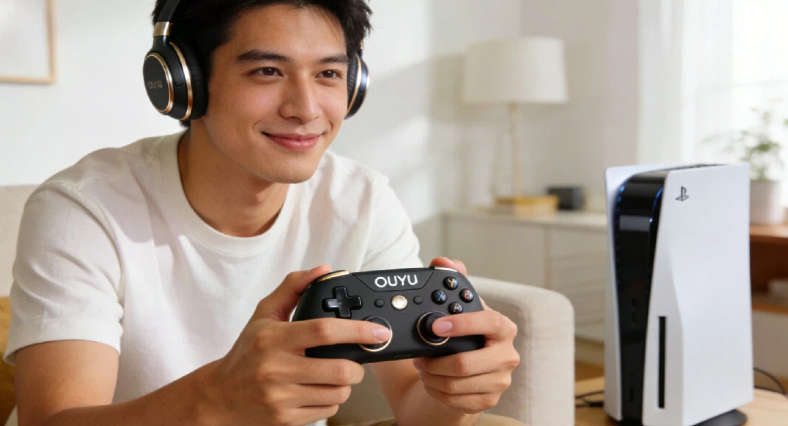
In the summer of 2012, a revolutionary idea captured the imagination of gamers worldwide: an affordable, open-source gaming console that would democratize game development and challenge the dominance of traditional gaming giants. This vision materialized as OUYA, the world’s first Android-based television gaming console. Launched through a groundbreaking Kickstarter campaign that shattered crowdfunding records, OUYA promised to bring indie gaming to the living room while maintaining an unprecedented commitment to openness and developer accessibility. This comprehensive analysis examines the OUYA console’s journey from its triumphant crowdfunding success through its eventual acquisition and discontinuation, exploring what made it revolutionary and why it ultimately failed to sustain its initial momentum.
OUYA Gaming Collection – Power, Style, and Innovation
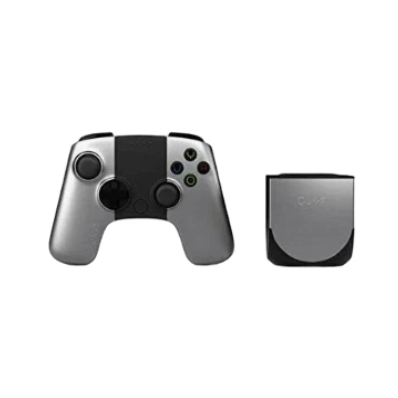
OUYA Video Game Console & Dual Controller Set
Price: $69.99
Description:
Dive into the world of endless gaming with the OUYA Video Game Console & 2 Controllers (Model ROC00001CA). Designed for creative players and indie game lovers, this console offers smooth performance and intuitive control. Preloaded with the OUYA operating system, it gives you access to a wide range of indie titles and retro games right out of the box.
Product Highlights:
Compatible Brand: OUYA
Color: Black
Includes: 2 controllers
Origin: China
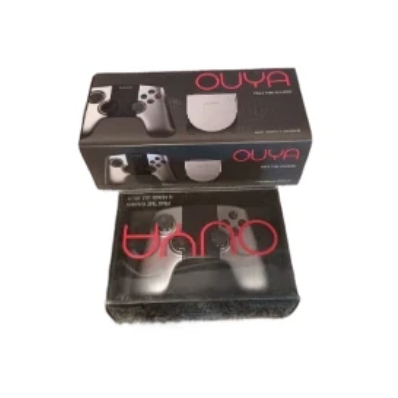
OUYA Game Console Lot of 2
Price: $99.99
Description:
The OUYA Game Console Lot of 2 is perfect for families or groups of friends who want to double the fun. These compact consoles are built for shared experiences, multiplayer gaming, and customized entertainment. With OUYA’s open-source platform, developers and gamers alike can enjoy freedom and versatility.
Product Highlights:
Brand: OUYA
Model: Ouya
Includes: 2 consoles
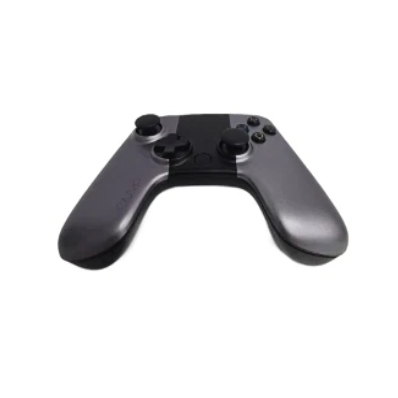
OUYA Game Console (Silver Edition) with Controller & HDMI Cable
Price: $99.99
Description:
Experience next-level style with the OUYA Game Console (Silver Edition). This sleek silver design comes ready to plug and play — featuring a matching silver controller, HDMI cable, and power supply. Whether you’re exploring classic titles or indie masterpieces, this set delivers elegant performance and modern convenience.
Product Highlights:
Brand: OUYA
Color: Silver
Connectivity: HDMI
Includes: 1 controller, power supply, HDMI cable
Product Overview
OUYA emerged during a pivotal moment in gaming history when mobile platforms were gaining traction, indie games were flourishing, and traditional console manufacturers maintained tight control over their ecosystems. The product positioned itself as a disruptive force, promising to bridge the gap between mobile gaming’s accessibility and console gaming’s living room experience.
The project launched its Kickstarter campaign in July 2012 with an ambitious goal of $950,000. What followed exceeded all expectations—the campaign raised over $8.6 million from more than 63,000 backers, becoming one of the most successful hardware projects in crowdfunding history. This overwhelming support reflected widespread enthusiasm for OUYA’s core promise: an open platform where any developer could publish games without gatekeepers, and where every game would offer a free trial before requiring payment.
OUYA officially launched to the public in June 2013, priced at an accessible $99. This aggressive pricing strategy aimed to position the console as an impulse purchase rather than a major investment, contrasting sharply with the $400-$500 price points of competing PlayStation and Xbox consoles launching that same year. The company’s open platform philosophy extended beyond rhetoric—OUYA actively encouraged users to root their devices, sideload applications, and modify the system, embracing the hacker culture that traditional console manufacturers typically opposed.
Hardware Specifications and Design
Physical Design Philosophy
OUYA’s industrial design reflected its philosophy of simplicity and accessibility. The console itself was remarkably compact—a 75mm aluminum cube with a distinctive brushed silver finish that made it instantly recognizable. Unlike the increasingly elaborate designs of contemporary consoles, OUYA embraced minimalism. The single LED indicator and touch-sensitive power button represented the entirety of its external interface, creating an almost zen-like aesthetic that fit unobtrusively into any entertainment center.
The console’s small footprint was both a practical advantage and a statement of intent. Weighing less than a pound and occupying minimal shelf space, OUYA positioned itself as a secondary or supplementary gaming device rather than a replacement for existing consoles. The aluminum construction provided adequate cooling for the mobile processor while giving the device a premium feel that belied its budget price point.
Core Hardware Components
At OUYA’s heart resided the NVIDIA Tegra 3 system-on-chip, a quad-core ARM processor that represented cutting-edge mobile technology in 2012. This processor, combined with NVIDIA’s GeForce GPU, delivered graphics capabilities comparable to high-end smartphones of the era. The system included 1GB of RAM—adequate for Android applications but modest compared to the 8GB found in competing next-generation consoles.
Internal storage consisted of 8GB of flash memory, with approximately 5GB available to users after accounting for the operating system. This limited capacity necessitated reliance on external storage or cloud gaming services for users with extensive libraries. The console supported USB 2.0 connectivity, allowing for external hard drive expansion, though this solution lacked the elegance of integrated storage.
OUYA’s video output capabilities included HDMI connectivity supporting 1080p resolution at 60 frames per second. While this matched the output specifications of contemporary major consoles, the Tegra 3’s actual rendering performance rarely pushed games to native 1080p resolution. Most titles rendered at 720p or lower and upscaled to 1080p output, a common compromise in mobile gaming.
Network connectivity options included both wired Ethernet and 802.11 b/g/n WiFi, ensuring reliable access to the OUYA store and online multiplayer features. The inclusion of Bluetooth 4.0 supported wireless controllers and accessories while maintaining energy efficiency—a crucial consideration for battery-powered peripherals.
Controller Design and Ergonomics
OUYA’s controller represented a sincere attempt to compete with established gamepad designs from Microsoft and Sony. The wireless controller featured a traditional layout with dual analog sticks, a directional pad, four face buttons (labeled O, U, Y, A to spell the brand name), and shoulder buttons including triggers. A small touchpad sat between the analog sticks, intended to facilitate menu navigation and provide alternative input methods for creative game designs.
The controller’s construction utilized matte plastic with faceplates that could be removed and customized, appealing to users who wanted to personalize their gaming setup. However, this customizability came with tradeoffs in build quality. Early production controllers suffered from issues including sticky buttons, unresponsive directional pads, and a tendency for faceplates to separate during vigorous gameplay. OUYA released improved controller revisions addressing many of these concerns, but the initial quality control problems damaged the product’s reputation among early adopters.
Powered by AA batteries, the controller offered approximately 8-10 hours of gameplay per charge—respectable but not exceptional. The decision to use replaceable batteries rather than rechargeable internal batteries proved polarizing; while it prevented the battery degradation issues common in sealed controllers, it also meant users needed to maintain a supply of batteries or invest in rechargeable alternatives.
System Software and Platform Architecture
Android Foundation and Custom Interface
OUYA built its operating system atop Android 4.1 (Jelly Bean), leveraging Google’s open-source mobile platform while creating a custom interface optimized for television displays and controller input. This approach provided immediate access to Android’s mature development tools and extensive app ecosystem while avoiding the cost and complexity of building a gaming operating system from scratch.
The custom OUYA launcher replaced Android’s touchscreen-oriented interface with a television-friendly design featuring large tiles and controller-driven navigation. The main menu organized content into categories: Play (games library), Discover (store browsing), Make (developer resources), and Manage (system settings). This straightforward structure aimed to minimize complexity, though critics noted the interface sometimes felt sluggish and lacked the polish of competing systems.
OUYA implemented mandatory system updates that occasionally frustrated users but ensured security patches and feature improvements reached all devices. These updates gradually refined the user experience, addressing performance issues and adding features like enhanced search functionality and improved game categorization. However, the updates also introduced occasional bugs and compatibility issues, highlighting the challenges of maintaining a complex software ecosystem with limited resources.
The OUYA Store Ecosystem
Central to OUYA’s value proposition was its digital storefront, which embodied the platform’s developer-friendly philosophy. The store’s defining feature—requiring every game to offer a free trial—represented a radical departure from traditional retail models. Developers could implement this requirement however they chose: time-limited demos, level-restricted versions, or freemium models with in-app purchases. This flexibility empowered developers while guaranteeing consumers could try before buying.
The store’s curation system initially struggled to balance openness with quality control. Early on, minimal submission requirements meant the storefront became cluttered with low-effort ports and amateur projects, making it difficult for quality titles to gain visibility. OUYA eventually implemented editorial curation, featuring selected games on the front page and creating themed collections to help users discover worthwhile content. However, this curation never achieved the sophistication of platforms like Steam, and browsing the full catalog often felt overwhelming.
OUYA’s revenue split offered developers 70% of sales proceeds, matching industry standards set by Apple’s App Store. While not exceptionally generous, this arrangement was fair and transparent. The company also ran promotional programs including the “Free the Games Fund,” which controversially offered matching funds to developers who raised money through their own crowdfunding campaigns, inadvertently incentivizing some questionable fundraising practices.
Development Platform and Tools
OUYA provided developers with a free development kit (the OUYA Development Kit or ODK) that integrated with standard Android development tools. Any developer with Android SDK experience could theoretically create OUYA games without learning entirely new systems or programming languages. This accessibility attracted indie developers working with limited budgets and timelines.
The platform’s openness extended to its approach to development hardware. Unlike traditional console manufacturers that required expensive development kits, every retail OUYA console could function as a development device after enabling a simple setting. This democratization of game development was revolutionary—a hobbyist could purchase a $99 console and immediately begin creating and testing games for publication.
OUYA maintained developer documentation and forums where creators could share knowledge and troubleshoot issues. The community-driven support network helped compensate for OUYA’s small official developer relations team. Successful developers often shared detailed postmortems explaining their approaches to optimization and monetization, creating valuable resources for newcomers to the platform.
Game Library and Content
Launch Lineup and Early Releases
OUYA’s launch library consisted of approximately 104 games, a respectable but not overwhelming selection for a new platform. This initial catalog included a mix of original titles, mobile game ports, and indie darlings from PC platforms. Notable launch titles included “TowerFall” (later acclaimed as TowerFall Ascension on other platforms), “Bombsquad,” “The Ball,” and “Beast Boxing Turbo.” While none of these titles were system-sellers on par with “Halo” or “Mario,” they demonstrated the variety possible on the platform.
The heavy reliance on indie games proved both a strength and weakness. Independent developers brought creativity and innovation, creating unique experiences rarely found on mainstream consoles. However, the absence of recognizable franchises and AAA productions meant OUYA struggled to attract mainstream consumers who associated console gaming with blockbuster titles. The platform secured some notable ports including “Final Fantasy III,” “Sonic the Hedgehog” classics, and “NBA Jam,” but these retrofitted mobile games often felt incongruous on a television display.
OUYA actively courted developers with exclusive content deals and promotional support. Several games launched as OUYA exclusives before later expanding to other platforms, providing temporary competitive advantages. However, true exclusives remained rare—most developers couldn’t justify limiting their potential market to a single platform with uncertain commercial viability.
Genre Coverage and Standout Titles
The OUYA library eventually grew to over 1,000 games, spanning virtually every gaming genre. Local multiplayer games thrived on the platform, with titles like “TowerFall,” “Toto Temple Deluxe,” and “Hidden in Plain Sight” delivering exceptional couch co-op experiences. These party games exemplified OUYA’s potential as a social gaming device, offering accessible fun without the complexity or cost of mainstream alternatives.
Retro-styled games and emulators found a natural home on OUYA. The platform’s openness allowed emulation software that would never receive approval on traditional consoles. Users could install emulators for classic systems ranging from the NES to the PlayStation, transforming OUYA into a versatile retro gaming console. While legally gray, this capability appealed to enthusiasts and extended the device’s practical utility far beyond its official software library.
Casual and puzzle games formed another significant content pillar. Titles like “You Don’t Know Jack,” “Knightmare Tower,” and various card games provided quick, accessible entertainment suitable for short play sessions. However, these games often felt better suited to mobile devices with touchscreens, highlighting the awkwardness of adapting smartphone-first designs to controller input.
Adventure and RPG games appeared less frequently but included some notable entries. “The Bard’s Tale” offered a substantial traditional RPG experience, while “Broken Age” brought acclaimed point-and-click adventure gaming to the platform. These deeper experiences demonstrated OUYA’s potential for serious gaming, though technical limitations sometimes compromised the experience.
Core Features and Innovation
Open Ecosystem Philosophy
OUYA’s commitment to openness distinguished it from every other gaming console on the market. The company explicitly welcomed users modifying their devices, stating that every console was also a development kit and that rooting was encouraged rather than prohibited. This stance attracted technically-minded users who valued freedom and flexibility over the curated garden approach of traditional manufacturers.
The ability to sideload Android applications transformed OUYA into a general-purpose Android device. Users installed alternative app stores, streaming applications, web browsers, and productivity software, extending functionality far beyond gaming. This versatility appealed to users seeking a multi-purpose media center, though it also diluted OUYA’s identity as a gaming-focused platform.
OUYA’s open-source aspirations included releasing portions of the system software under open licenses, enabling community developers to contribute improvements and modifications. While the hardware remained proprietary, this software openness fostered a dedicated modding community that created custom interfaces, performance optimizations, and feature additions that OUYA’s small team couldn’t have developed independently.
Competitive Pricing Strategy
The $99 price point represented OUYA’s most aggressive market positioning. This pricing undercut Nintendo’s Wii U ($299-$349), Microsoft’s Xbox 360 ($199-$299), and Sony’s PlayStation 3 ($199-$269) by substantial margins. OUYA calculated that eliminating traditional retail markups and licensing fees while using mobile components would enable profitability even at this aggressive price.
This strategy aimed to position OUYA as an impulse purchase or supplementary device rather than a primary gaming platform requiring careful budget consideration. Marketing emphasized that for the price of two or three full-priced games on competing consoles, consumers could own an entire OUYA system. Additional controllers retailed for $49.99, making multiplayer setup affordable compared to $60-$70 controllers for PlayStation and Xbox.
However, the budget pricing created challenges. Consumers often associate price with quality, and OUYA’s affordable tag sometimes translated to perceptions of inferiority. Additionally, the thin margins left little room for marketing expenses or content acquisition deals, limiting OUYA’s ability to compete with the massive promotional budgets of established manufacturers.
Supporting Independent Developers
OUYA positioned itself as a champion of independent game development, offering opportunities unavailable on traditional platforms. The company eliminated submission fees, approval processes, and content restrictions that traditionally gatekept console publishing. Any developer could publish any game—subject only to basic technical functionality standards—without needing publisher backing or platform approval.
This democratization attracted hundreds of indie developers who lacked the resources or connections to access PlayStation, Xbox, or Nintendo platforms. OUYA provided these creators with a console audience, controller-based gameplay, and television display without the typical barriers to entry. Several developers credited OUYA with giving them their first console publishing opportunity and the confidence to continue game development professionally.
The platform ran various developer support programs including the aforementioned “Free the Games Fund,” marketing co-promotions for standout titles, and featuring programs that highlighted quality games on the storefront. While these initiatives had mixed results—some controversy arose around fund qualifications and distribution—they demonstrated OUYA’s genuine commitment to developer success rather than merely extracting submission fees.
Media Center Capabilities
Beyond gaming, OUYA functioned effectively as a media streaming device. The Android foundation supported installation of popular streaming applications including Netflix, Hulu, Plex, and notably XBMC (later known as Kodi). This media player software transformed OUYA into a capable home theater PC replacement, playing local media files in various formats and streaming content from network shares.
The combination of compact size, silent operation (the Tegra 3’s efficient thermals required minimal cooling), and comprehensive codec support made OUYA attractive to home theater enthusiasts seeking an affordable, versatile media player. Some users purchased the console exclusively for these capabilities, never engaging with gaming content. This unintended use case demonstrated both OUYA’s versatility and the challenge of maintaining a clear product identity.
However, the media center functionality created tensions with content providers. Services like Netflix were technically unsupported on OUYA, requiring sideloading or workarounds. Video quality occasionally suffered from bandwidth limitations or insufficient hardware acceleration for high-bitrate streams. While functional, OUYA never quite matched purpose-built streaming devices like the Roku or Amazon Fire TV in reliability or official app support.
Market Performance and Reception
Crowdfunding Triumph
OUYA’s Kickstarter campaign became a cultural phenomenon that transcended gaming circles. The project launched with a compelling video featuring passionate founders explaining their vision for democratizing game development and disrupting the console industry. This authentic enthusiasm resonated with backers frustrated by the closed nature of traditional gaming platforms and eager to support alternatives.
The campaign’s momentum was extraordinary. It reached its $950,000 goal within eight hours and accumulated over $2.6 million in the first day. By the campaign’s conclusion on August 9, 2012, OUYA had raised $8,596,474 from 63,416 backers—at the time, one of the highest-funded projects in Kickstarter history. Media coverage amplified the excitement, with technology and gaming publications portraying OUYA as a potential industry disruptor.
This overwhelming financial support validated the market appetite for an open gaming platform and provided OUYA with capital to finalize development and begin production. However, the massive backer count also created unprecedented fulfillment challenges and raised expectations to potentially unrealistic levels. Every backer became an invested stakeholder with strong opinions about the product’s direction, creating pressure that would later complicate decision-making.
Critical Reviews and Media Assessment
Professional reviews of the retail OUYA ranged from cautiously optimistic to harshly critical. Gaming publications appreciated the concept and philosophy but frequently criticized the execution. Common complaints included controller build quality, limited library of compelling games, interface lag, and the reality that mobile-quality graphics looked underwhelming on large television displays compared to contemporary PlayStation and Xbox titles.
Reviewers acknowledged OUYA’s positive attributes: the attractive industrial design, the genuinely open ecosystem, the support for indie developers, and the compelling price point. However, these strengths rarely outweighed concerns about the shallow game library and technical limitations. Review scores typically fell in the 5-7 out of 10 range—not damning, but far from the enthusiastic endorsements needed for mainstream success.
User reviews proved similarly mixed. Enthusiast gamers and technology hobbyists often appreciated OUYA for what it represented and what it could become with community support and software updates. These users enjoyed tinkering with the system, sideloading applications, and supporting indie developers. Conversely, mainstream consumers expecting a traditional console experience felt disappointed by the limited graphics capabilities and unfamiliar game selection.
The gaming press gradually shifted from covering OUYA as an exciting disruptor to treating it as a cautionary tale about crowdfunding ambition exceeding realistic capabilities. This narrative transformation damaged OUYA’s reputation and made attracting new customers increasingly difficult as the novelty faded and limitations became apparent.
Sales Performance and Market Impact
OUYA reported selling over 200,000 consoles during its first year, respectable but far short of major console launches. For comparison, the PlayStation 4 and Xbox One each sold over one million units during their first 24 hours of availability. This disparity highlighted OUYA’s positioning as a niche product rather than mainstream phenomenon, despite the Kickstarter excitement suggesting broader appeal.
Revenue generation proved even more challenging than hardware sales. Many users purchased the console but spent little or nothing on software, preferring free games or sideloaded content. The median OUYA owner spent less than $20 on software purchases during the console’s lifetime—insufficient to sustain a healthy ecosystem. Developers reported poor conversion rates from free trials to paid purchases, with some quality titles struggling to generate even four-figure revenues.
The limited financial success created a vicious cycle. Disappointing sales discouraged developers from investing resources in OUYA-specific development or optimization. The resulting lack of compelling exclusive content further reduced consumer appeal, suppressing hardware sales. This cycle accelerated as competing Android gaming solutions emerged, fragmenting the already-small market for living room Android gaming.
Challenges and Obstacles
Technical Limitations
The Tegra 3 processor, while impressive for mobile devices in 2012, rapidly became outdated as smartphone and tablet technology advanced. By 2014, flagship mobile devices featured substantially more powerful processors, and the performance gap between OUYA and current mobile hardware became embarrassingly large. Games designed for contemporary Android devices often performed poorly or required extensive optimization to function adequately on OUYA.
Graphics quality represented another significant limitation. While OUYA technically supported 1080p output, the actual rendering capabilities rarely produced visuals competitive with PlayStation 3 or Xbox 360 titles, let alone the PlayStation 4 and Xbox One launching in late 2013. Mobile games designed for small smartphone displays often looked crude when magnified to 40+ inch televisions, exposing low-resolution textures and simplistic geometry.
Storage constraints created practical problems for users with substantial game libraries. The usable 5GB internal capacity filled rapidly, forcing reliance on external storage or frequent game deletion and reinstallation. Cloud gaming services could mitigate storage limitations but introduced latency and bandwidth concerns. The USB 2.0 interface also bottlenecked external storage performance compared to contemporary USB 3.0 solutions.
Content Ecosystem Deficiencies
Despite hundreds of available games, OUYA never secured the killer application—the must-have exclusive that justifies console purchase. “TowerFall” came closest but later released on competing platforms. The absence of recognizable franchises or celebrity developer partnerships meant OUYA struggled to capture mainstream attention beyond its initial Kickstarter enthusiasm.
Game quality varied enormously, with minimal curation allowing countless low-effort submissions to clutter the storefront. Users frequently encountered broken games, misleading descriptions, or cynical cash-grabs designed to exploit the free trial requirement while delivering minimal content. This inconsistency eroded consumer trust and made discovering genuinely worthwhile games unnecessarily difficult.
Developer support gradually declined as commercial realities became apparent. Early enthusiasm gave way to disappointment as developers realized the small install base and low conversion rates couldn’t sustain development costs. Major studios never seriously engaged with the platform, focusing resources on more lucrative iOS, Android mobile, PlayStation, Xbox, and PC markets instead.
Competitive Market Pressures
OUYA faced competition from multiple directions simultaneously. Traditional consoles offered superior graphics, established game libraries, and mainstream marketing budgets that dwarfed OUYA’s resources. The PlayStation 4 and Xbox One launches in November 2013 captured gaming enthusiast attention and wallets, relegating OUYA to afterthought status.
Smart TVs and set-top boxes provided overlapping functionality with Android-based platforms offering similar streaming and casual gaming capabilities. Devices from Amazon, Google, and Apple entered the market with superior technical specifications, established app ecosystems, and strong brand recognition. OUYA’s gaming focus became a liability as competitors offered broader entertainment value.
The mobile gaming market itself competed for OUYA’s target audience. Smartphone and tablet gaming grew explosively during OUYA’s lifespan, with improving hardware enabling increasingly sophisticated games. Many potential OUYA customers already owned capable mobile gaming devices, reducing the appeal of a dedicated Android console that offered similar content with inferior portability.
User Experience Issues
Interface responsiveness remained problematic throughout OUYA’s lifecycle. Menu navigation occasionally stuttered or lagged, particularly when browsing large game catalogs or loading game details. These performance issues, while minor individually, accumulated into a perception of an unpolished, underpowered system. Users accustomed to the refined interfaces of contemporary consoles found OUYA’s software experience frustratingly rough around the edges.
Controller quality control problems persisted beyond initial production runs, with ongoing reports of connectivity dropouts, button failures, and general durability concerns. While later controller revisions improved build quality, the damage to OUYA’s reputation proved difficult to repair. Budget-conscious consumers particularly resented paying premium prices ($49.99) for replacement controllers of questionable reliability.
Network connectivity issues affected some users, with WiFi dropout complaints appearing regularly in community forums. The combination of modest processing power and sometimes-unreliable networking created frustrating experiences during online multiplayer gaming or digital purchases. While not universal, these technical problems disproportionately affected early adopters and reviewers, amplifying their impact on public perception.
Evolution and Conclusion
Product Development and Updates
OUYA released several significant software updates addressing user feedback and adding requested features. These updates improved storefront navigation, enhanced search functionality, added parental controls, and refined system performance. The company demonstrated responsiveness to community input, though limited engineering resources meant some desired features never materialized.
Hardware revisions focused primarily on controller improvements rather than console upgrades. Enhanced controllers with refined button mechanisms and improved build quality eventually replaced the problematic initial design. However, OUYA never released a hardware refresh with upgraded internals—a crucial limitation as the Tegra 3 aged and competitors introduced superior specifications.
Partnership strategies evolved as OUYA sought sustainability. The company explored white-label licensing deals with hardware manufacturers, enabling other companies to produce OUYA-compatible devices with improved specifications. Mad Catz released the MOJO micro-console running OUYA software, theoretically expanding the ecosystem, though this fragmentation created confusion and divided the already-small user base.
Acquisition by Razer
In July 2015, gaming peripherals manufacturer Razer acquired OUYA’s software assets, game library, and developer relationships for an undisclosed sum. This acquisition effectively ended OUYA as an independent hardware platform, though Razer committed to maintaining store operations and supporting existing users temporarily. The acquisition acknowledged OUYA’s commercial failure while recognizing value in the software ecosystem and developer community.
Razer integrated OUYA’s software into its own Android TV-based Forge TV micro-console, attempting to preserve compatibility and migrate users to the upgraded hardware. However, the Forge TV itself achieved limited commercial success and was discontinued in 2016, effectively ending the OUYA software platform’s evolution. Razer’s subsequent gaming initiatives focused on traditional PC peripherals rather than pursuing the Android console market.
The acquisition price remained confidential, but industry analysis suggested a substantial discount from OUYA’s peak valuation. Early investors and Kickstarter backers received no financial return, highlighting the risks inherent in supporting hardware startups. Employees faced layoffs, and the OUYA brand gradually faded from public consciousness as Razer deprioritized Android gaming in favor of more profitable business segments.
Service Termination and Legacy
OUYA’s online store and services officially shut down on June 25, 2019, rendering devices unable to access the digital storefront or download previously purchased games. Razer provided advance notice and encouraged users to download and back up their game libraries, though many users had already abandoned the platform years earlier. This closure marked the definitive end of OUYA as a functional gaming ecosystem.
The service termination left existing console owners with limited options. Sideloading capabilities remained functional, allowing continued use as an Android device for media playback or retro gaming emulation. Community-developed alternatives emerged, including third-party stores and preservation projects attempting to archive OUYA’s game library. However, for mainstream users without technical expertise, the devices became essentially obsolete.
OUYA’s physical hardware remains functional for offline gaming and sideloaded applications, maintaining some utility for dedicated users. The homebrew and emulation communities continue supporting OUYA as a competent retro gaming platform and Android development device. This niche usage preserves OUYA’s existence beyond its commercial lifespan, though far from the mainstream gaming impact originally envisioned.
Historical Significance and Lessons
Industry Impact and Influence
OUYA’s most lasting contribution was demonstrating crowdfunding’s viability for hardware projects. The Kickstarter campaign’s success inspired countless subsequent hardware ventures, proving that passionate niche audiences could provide alternative funding for innovation that traditional venture capital might reject. This democratization of hardware funding enabled diverse products that enriched the technology landscape, even as most individual projects struggled to achieve sustainable commercial success.
The open platform philosophy, while unsuccessful commercially for OUYA, influenced subsequent discussions about console ecosystems. OUYA’s radical openness contrasted sharply with traditional console manufacturers’ walled gardens, contributing to gradual industry shifts toward greater developer accessibility and reduced certification barriers. While major manufacturers never fully embraced OUYA’s approach, modest improvements in independent developer access partially vindicate OUYA’s advocacy.
The micro-console category that OUYA pioneered evolved into today’s streaming sticks and Android TV devices. While OUYA failed, the market validated consumer interest in affordable, compact living room devices. Companies like Amazon, Google, and NVIDIA successfully captured this market with superior execution, technical specifications, and content partnerships, benefiting from OUYA’s pioneering work in establishing the category.
Supporting Independent Game Development
OUYA provided genuine opportunities for independent developers who lacked resources or connections to access traditional console platforms. Numerous developers cite OUYA as their first console publishing experience, crediting the platform with launching their professional careers. Several games that debuted on OUYA later found success on mainstream platforms, demonstrating that OUYA functioned as a valuable incubator despite commercial limitations.
The “try before you buy” requirement, while controversial among developers, represented consumer-friendly thinking that anticipated subscription services like Xbox Game Pass. OUYA correctly identified consumer resistance to blind purchasing and attempted to address this through mandatory demos. While implementation challenges prevented this innovation from flourishing on OUYA, the underlying concept influenced subsequent industry trends toward trial periods and subscription models.
OUYA’s developer community fostered collaboration and knowledge sharing that benefited indie gaming broadly. Developers who met through OUYA forums and events formed partnerships, shared technical expertise, and supported each other’s projects. These relationships and connections persisted beyond OUYA’s closure, creating lasting value for the independent development community that transcended the platform’s commercial failure.
Cautionary Business Lessons
OUYA’s trajectory illustrates critical lessons about hardware entrepreneurship. Enthusiastic crowdfunding support, while validating market interest, doesn’t guarantee long-term commercial viability. Converting initial enthusiasm into sustained engagement requires content, performance, and user experience that meets expectations created during the funding campaign. OUYA struggled to deliver on the ambitious vision its marketing promised, disappointing backers despite genuine effort and commitment.
Ecosystem development requires sustained investment far exceeding initial hardware production costs. OUYA’s financial model underestimated the resources necessary to attract developers, curate quality content, market effectively to mainstream consumers, and maintain platform updates. Hardware margins alone proved insufficient to fund comprehensive ecosystem development, creating a gap between ambition and execution that ultimately proved fatal.
Market positioning and target audience definition critically affect product success. OUYA never definitively resolved whether it targeted hardcore gamers, casual users, indie game enthusiasts, or media center builders. This ambiguity diluted marketing effectiveness and confused potential customers about the product’s value proposition. Successful platforms typically identify and dominate specific niches before expanding, whereas OUYA attempted simultaneous appeal to multiple disparate audiences without sufficient resources to succeed in any.
Target Audience and Purchase Recommendations
Ideal User Profiles
OUYA originally appealed most strongly to independent game enthusiasts who valued supporting innovative developers and discovering unique gaming experiences unavailable elsewhere. These users appreciated OUYA’s curation-free approach as an opportunity to explore experimental game designs without corporate gatekeeping. The relatively small but passionate indie gaming community found genuine value in OUYA despite its technical limitations.
Technology enthusiasts and tinkerers represented another natural audience. Users who enjoyed rooting devices, installing custom software, and exploring system capabilities found OUYA’s openness refreshing compared to locked-down alternatives. These early adopters viewed OUYA as an affordable Android development device and experimentation platform rather than purely a gaming console, extracting value through customization and modification.
Retro gaming collectors and emulation enthusiasts discovered unexpected utility in OUYA’s hardware and permissive software policies. The ability to easily install emulators for classic gaming systems transformed OUYA into an all-in-one retro gaming solution. While legally ambiguous, this use case provided tangible value to users with existing ROM collections seeking convenient television playback without building dedicated emulation PCs.
Budget-conscious casual gamers considering OUYA as an affordable entry point to console gaming often experienced disappointment. The limited library of polished, accessible titles suitable for mainstream audiences meant casual users frequently struggled to find compelling content. The lack of familiar franchises and AAA productions left these users feeling that OUYA’s low price reflected correspondingly low value.
Usage Scenarios and Applications
OUYA functioned effectively in family living room settings for local multiplayer gaming sessions. The library of party games and couch co-op titles provided accessible entertainment for gatherings without requiring significant investment or gaming expertise. Simple, immediately understandable games allowed non-gamers to participate comfortably, filling a niche between complex traditional console games and smartphone casual titles.
Media center applications represented OUYA’s most universally successful deployment. The combination of compact size, silent operation, and broad codec support through applications like XBMC/Kodi made OUYA a capable streaming device for users prioritizing flexibility over official app support. Home theater enthusiasts on tight budgets found OUYA offered surprising value as a secondary or bedroom media player.
Educational and development contexts provided another viable use case. Students learning Android development or game programming could purchase affordable OUYA hardware for testing and deployment without investing in expensive development equipment. The open documentation and supportive community facilitated learning, making OUYA genuinely useful in educational settings despite commercial failure.
Current Collectibility and Value Assessment
As of 2026, OUYA consoles occupy an interesting niche in gaming collectibles. Original Kickstarter edition consoles, particularly those still sealed in original packaging, command modest premiums among retro gaming collectors interested in preserving gaming history artifacts. However, OUYA lacks the mainstream recognition or nostalgic attachment that drives high valuations for vintage Nintendo or Sega systems, limiting investment potential.
Functional OUYA consoles sell for $20-$50 in secondary markets, reflecting their limited practical utility post-service shutdown. These devices appeal primarily to collectors interested in owning a physical artifact representing an important moment in gaming history or to tinkerers seeking affordable Android hardware for projects. Controllers remain available but have little value outside OUYA-specific usage.
The collecting community debates OUYA’s historical significance, with opinions ranging from dismissing it as a failed curiosity to crediting it as an important catalyst for indie gaming and crowdfunding hardware. This ambiguity means OUYA collectibility will likely remain modest, appreciated by historians and enthusiasts but never achieving the widespread desirability of truly iconic gaming platforms.
For users considering OUYA in 2026, practical value is minimal. The defunct online services, outdated hardware specifications, and availability of superior alternatives for every intended use case make functional purchase recommendations difficult. Collecting OUYA makes sense only for gaming historians, technology archivists, or nostalgic early backers seeking to preserve their connection to a promising but ultimately disappointing experiment in gaming innovation. Alternative recommendations would include modern Android TV devices for media streaming, dedicated retro gaming consoles for emulation, or current-generation gaming systems for actual gameplay.